Where Local-Stock Sellers Sit in Singapore’s Online Vape Market
Singapore’s online vape market is not a single storefront. It is a layered structure made up of different kinds of sellers, each with its own supply chain, delivery model, and risk profile. Understanding that structure is the fastest way for a buyer to work out which type of seller actually suits them. Some operators run on imported stock with long lead times. Others hold inventory locally and compete almost entirely on speed. This article maps the landscape from the outside in, then narrows down to the segment that matters most to convenience-driven buyers: local-stock sellers, including the model used by lana vape sg.
The Overall Shape of Online Vape Retail in Singapore
Online vape retail in Singapore sits at an unusual intersection. Demand is steady, the customer base is geographically tiny, and the logistics environment is one of the most tightly organised in the region. That combination produces a market with a small number of structural roles rather than hundreds of independent shops.
At the top of the structure are distributors and bulk importers. They rarely deal with end customers directly. Their job is to move volume into the country and then push it downstream to smaller operators. Below them sit the retail layers: marketplace-style listings, social-channel sellers, and dedicated online stores that own their own delivery process. Each layer has a different relationship with stock, and that relationship determines almost everything a buyer experiences — how fast an order arrives, how consistent the product is, and how predictable the packaging will be.
The key dividing line is not brand or price. It is whether the seller holds physical inventory in Singapore or routes orders through an overseas warehouse. That single factor shapes delivery time, product authenticity, and the ability to resolve problems after a sale. It is also the reason local-stock sellers occupy a distinct position in the market rather than simply being one option among many.
Why Local Stock Changes the Buyer Experience
When a seller holds stock locally, the order-to-doorstep journey collapses. There is no international transit leg, no customs queue, and no uncertainty about whether a particular model is actually available. For the buyer, this shows up in three practical ways.
First, delivery windows become meaningful. A seller with local inventory can offer same-day or next-day fulfilment because the product is already in the country. A seller without it can only offer estimates. Second, product consistency improves. Local stock is usually sourced in batches and stored under controlled conditions, which reduces the chance of receiving a device that has been sitting in transit for weeks. Third, after-sales contact becomes simpler. If something is wrong with an order, a local operator can correct it without waiting on an overseas counterpart.
This is the segment where a service like Singapore lana vape operates. The model is straightforward: maintain ready inventory, keep the catalogue focused on high-demand devices and pods, and compete on delivery reliability rather than on speculative pricing. For buyers who value predictability over the lowest possible headline price, that trade-off is usually the right one.
It is worth being clear about what local stock does not solve. It does not make a product inherently better, and it does not remove the need to check that a device is authentic. What it does is remove the logistical variables that cause most buyer frustration: delays, substitutions, and unclear availability.
How Same-Day Delivery Became the Competitive Standard
In a market as compact as Singapore, distance is not the constraint — coordination is. A courier can cross the island quickly, so the real challenge for a retailer is having the item picked, packed, and dispatched within the same operational window as the order. That is why same-day delivery has become the clearest signal of a well-run local operation.
Same-day service is not just a convenience feature. It is evidence of an underlying system. To promise it consistently, a seller needs live inventory tracking, a packing process that does not depend on waiting for stock, and a courier arrangement that can absorb peak demand. Sellers who cannot do this tend to offer vague delivery language instead of firm windows.
For buyers, the practical test is simple. If a store advertises Lana vape same day delivery, that claim should be backed by visible local stock and a clear order cutoff. When those two elements are present, the delivery promise is usually credible. When they are missing, the promise tends to slip.
This is also where the market separates into tiers. Operators with genuine local logistics can treat speed as a product feature. Operators without it can only treat speed as marketing copy. Over time, buyers learn to tell the difference, and the local-stock tier tends to retain customers because the experience is repeatable.
Discreet Packaging and the Trust Layer
Packaging is one of the least discussed parts of online vape retail, yet it carries a disproportionate amount of the buyer’s trust. A discreet parcel does two things at once: it protects privacy during delivery, and it signals that the seller has thought carefully about the customer’s situation rather than only about moving units.
In practice, discreet packaging means plain outer wrapping, no product branding on the exterior, and no descriptive labels that reveal contents. For a delivery-based retailer, this is not an optional extra — it is part of the core service. Buyers who order regularly tend to weight it heavily, because it affects how comfortable they are ordering again.
Discreet packaging also interacts with delivery method. A same-day courier handing over a plain parcel is a very different experience from a parcel that sits in a locker with visible markings. Sellers who control both the packing and the last-mile handover have more control over the overall experience, which is one reason vertically integrated local operators tend to score better on trust.
This is the layer where Singapore vape delivery services distinguish themselves from generic shipping. The packaging standard is part of the product, not an afterthought.
Product Range and the Role of Disposable Devices
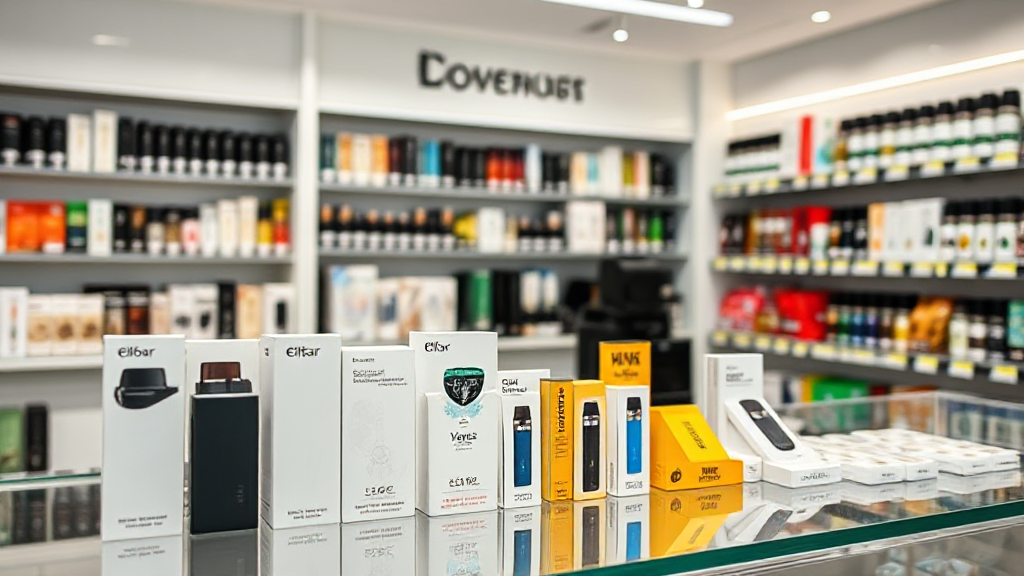
Singapore’s online vape market is heavily weighted toward disposable devices. That is a structural feature, not an accident. Disposables are simple to stock, simple to ship, and simple for buyers to choose. They also suit the local-stock model particularly well, because they do not require the ongoing accessory ecosystem that reusable systems do.
Within this category, a small number of brands dominate attention. Elfbar and Elf Bar models appear consistently in catalogues, including high-capacity formats such as the Elf Bar S1 15000 and the Elf Bar Ice King Pro 45k. For a local-stock seller, carrying these models is a way of matching demand without spreading inventory too thin across dozens of low-volume products.
The range decision matters more than it first appears. A seller who stocks everything ends up holding slow-moving inventory that ages on the shelf. A seller who stocks a focused set of high-demand devices can keep turnover high, which in turn keeps stock fresh. For the buyer, a focused catalogue is usually a good sign: it suggests the operator understands which products actually move and is not simply listing whatever can be sourced.
This is the logic behind a Vape delivery sg catalogue built around proven disposable models rather than an endless long tail. The narrower range is a deliberate trade-off in favour of availability and freshness.
Choosing Between Seller Types: What Actually Matters
Once the market structure is clear, the buying decision becomes easier to reason about. The question is not which seller is cheapest in the abstract, but which seller type matches the buyer’s priorities.
Buyers who prioritise speed and predictability should look for local stock, a firm delivery window, and a clear order cutoff. Buyers who prioritise range may accept longer waits in exchange for access to a wider catalogue. Buyers who prioritise privacy should check packaging standards before ordering, not after. In most cases, these priorities point toward the same conclusion: a local-stock operator with its own delivery process covers more of them at once.
It also helps to look at how a seller communicates. Operators who hold stock tend to talk about availability in specific terms — models, quantities, delivery windows. Operators who do not hold stock tend to talk in general terms and rely on urgency. That difference in language is one of the most reliable signals available to a buyer before placing an order.
For anyone comparing options, a Sg vape shop delivery model that combines local inventory, same-day fulfilment, and discreet packaging is the configuration that resolves the most common buyer concerns at once. It is not the only valid model in the market, but it is the one that best fits the constraints of Singapore’s geography and logistics.
Frequently Asked Questions
What does “local stock” actually mean for an online vape order?
It means the seller already holds the product physically in Singapore before the order is placed. The item does not need to cross a border or clear customs, so it can be picked, packed, and dispatched within the same operational day. This is what makes firm same-day delivery windows possible rather than estimated ones.
Why do delivery times vary so much between sellers?
Variation usually comes from where the stock sits, not from courier speed. In a compact market like Singapore, the courier leg is short. The delay, when it happens, is almost always upstream — waiting for inventory, confirming availability, or routing an order through an overseas warehouse. Sellers with local stock remove that upstream delay.
Is discreet packaging standard across the market?
No. Discreet packaging is common among delivery-focused local operators, but it is not universal. It is worth checking before ordering, because the standard affects both privacy and the overall delivery experience. Sellers who control their own packing and last-mile handover tend to be more consistent here.
How should a buyer judge whether a seller’s catalogue is reliable?
A focused catalogue is usually a positive signal. It suggests the seller stocks products that actually move and can keep inventory fresh. Very broad catalogues with many low-volume items can indicate drop-shipping or long sourcing chains, which tends to reduce availability and delivery reliability.
What is the main trade-off between local-stock sellers and wider-range sellers?
Local-stock sellers trade catalogue breadth for speed, consistency, and privacy. Wider-range sellers trade speed and reliability for access to more products. The right choice depends on which of those priorities matters more for a given order, but for repeat buyers the local-stock model usually wins on overall experience.
Positioning Summary
Singapore’s online vape market is best understood as a structure rather than a list of shops. Distributors sit upstream, retail layers sit in the middle, and the buyer-facing experience is determined almost entirely by whether the seller holds local inventory. That single variable drives delivery speed, product consistency, packaging standards, and after-sales responsiveness.
Within that structure, local-stock sellers occupy a specific and defensible position. They are not competing on the widest range or the lowest theoretical price. They are competing on predictability — the ability to promise a delivery window and meet it, to keep a focused catalogue in stock, and to package orders discreetly as a standard rather than an upgrade. For buyers who value those qualities, that is the segment worth prioritising, and it is where the lana vape sg model fits into the wider market.